
Gardening
Guide to Growing and Enjoying Herb Gardens: History, Cultivation, and Practical Tips
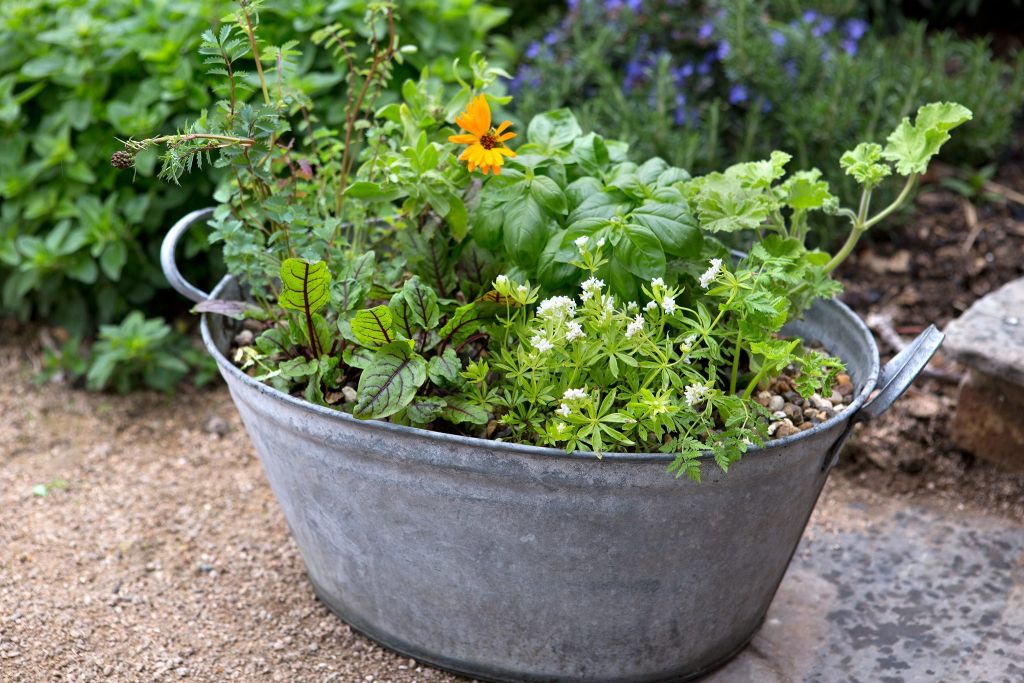
Throughout history, herbs have been used as medicines, in cooking, for dyes and for fragrance. The Greek physician and father of medicine listed several hundred herb remedies which were used for many centuries. During the Elizabethan Age of the 16th century, the culinary use of herbs reached its peak, and elaborate, decorative herb gardens would yield as many as 60 varieties of herbs.
Although most herbs for these purposes can now be bought pre-packaged at the store, growing them at home has again become very popular. They not only serve many useful purposes, but add fragrance, color and texture to the garden as well.
Many herbs can grow as border plants in most gardens, but most grow better in plots of their own. If space is a limitation, they also grow very well in window boxes and on sunny window sills.
Herbs thrive in light, loamy, well-drained soil, but they can grow well even in less fertile soil. All herbs, except Sorrel, thrive in alkaline soils and prosper from an application of fertilizer containing some lime applied once a year.
Choose an area at least three feet by five feet which receives a lot of sun. Because an herb garden can look pretty bedraggled in the winter, the herb garden should not generally serve as a focal point for the yard. Located next to the back door or kitchen is a good spot.
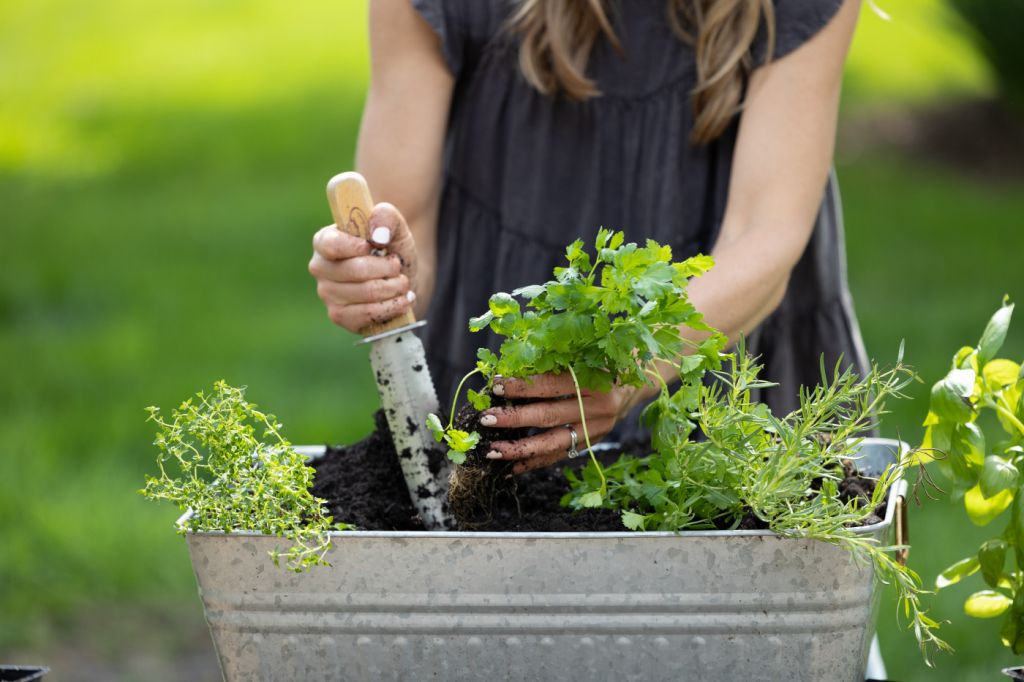
Now is the best time to prepare the soil. It should be prepared to a depth of about six inches and raked to a fine cultivation.
Herbs are either annuals or perennials and can be purchased as seeds or seedlings. Some varieties come in both forms. Seeds should be sown up to half an inch deep and eight to twelve inches apart, depending upon the variety. Once seedlings are large enough to handle, thin them no closer than three inches apart.
The herb garden should be weeded and watered once a week. Herbs generally do not take any more care than other plants.
Herbs are harvested in a number of ways depending upon the variety. Almost all are used dried, and some can be harvested and frozen. Depending upon the variety, seeds, flowers, stems and foliage may be used.
Some of the more popular herbs used in cooking which grow well in this area include: sage, thyme, mint, parsley, mustard, basil, chives, celery and winter cress. Bay, rosemary and lavender are known for their fragrance, and peppermint, chamomile, lugwort, foxglove and feverfew are known for their medical qualities.
Fore more information about herbs and herb gardening, contact your local garden center. Many communities also have a branch of the Herb Society in their area.
Herbs are fun to grow and use and are an easy way to celebrate a bit of history and out some seasoning into your life.
Gardening
Prepare Your Lawn for Summer Heat

Did you know that you can pre-condition your lawn so that it can withstand summer heat?
According to the non-profit Turf Resource Center, for the best results, and an even stronger lawn when the summer begins to fade toward autumn, you should start immediately to prepare your lawn by following these simple steps:
Step 1. Reduce or eliminate fertilizer and weed control applications at least 30 days before you expect the temperatures to start increasing toward summer highs. While fertilizers encourage growth, they also create a lush rush of growth that does not withstand the high summer temperatures very well. Weed-killing herbicides, while targeting unwanted plants, may also place grass under stress that reduces its rate of growth.
Step 2. Gradually raise the cutting height of your mower by 25 to 50 percent as the temperatures increase during the summer. Longer grass encourages deeper roots and shades the soil better.
Step 3. Mow as frequently as necessary so you never remove more than one-third of the grass blade at a time. Increased mowing frequency will encourage deeper roots that are essential to your lawn’s health when the summer gets hotter and hotter. Also, always make sure your mower blade is sharp so that the grass blade is cut cleanly and not ripped raggedly.
Step 4. Water your lawn late at night or early morning, at a rate that can soak deeply into the soil. Most lawns need about on-inch of rain or irrigation water every week. Light and frequent sprinklings encourage shallow roots that can’t provide the grass with all of the moisture it will need during hotter times. Infrequent, deep watering encourages deeper and deeper roots.
Step 5. If severe watering restrictions are enforced, ration the water available to you by establishing priorities for your lawn. You may want to use the water on the portion of your yard that receives the most use or traffic or apply it to that area of your yard that you want to keep green. If proper steps have been taken, allowing your lawn to go dormant and be a golden brown during the hottest part of the summer can be an acceptable solution as it should re-green when the heat subsides and water can be applied.
Attempting to maintain an entire lawn that is perfectly green, when only limited water is available, may be impractical and certainly frustrating. It could also result in a weaker lawn if you attempt to lightly sprinkle the entire lawn.
Step 6. As the summer heat subsides, or watering restrictions are eased, you can start by once again watering deeply, but infrequently; allow increased traffic on all areas and gradually lower the mowing height. If weed control is necessary, you should first allow the grass to re-establish its health.
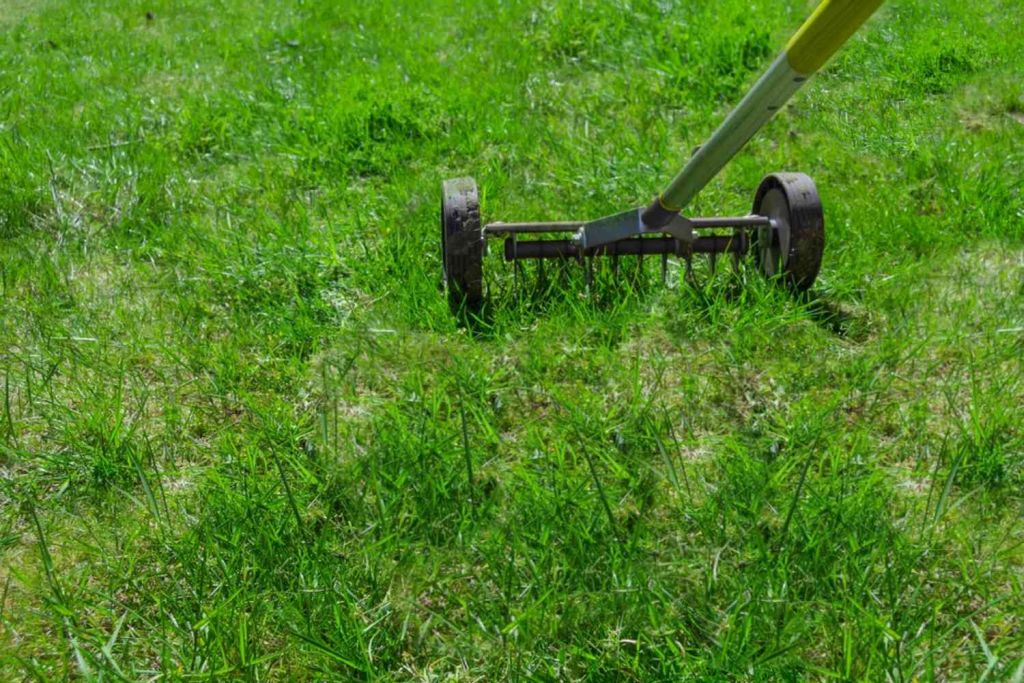
Step 7. Actions you can take in early fall, to strengthen your lawn for the winter and especially next summer, include aerating and/or dethatching your lawn (gas-powered, core-removal aerators and thatch removal units are available from lawn and garden suppliers or broad-based rental stores). A week or two after these operations, apply a well-balanced, slow-release fertilizer. If a soil test shows your lawn to be deficient in potassium, higher levels should be applied as this nutrient encourages rooting that improves heat avoidance and tolerance.
Gardening
Top Dressing Your Lawn: How to Level Uneven Terrain
Low spots in an otherwise level lawn are caused by several factors. Most homeowners would like to get rid of them. Mowing over an uneven terrain can get tiring very quickly, both physically and emotionally.
Depressions in the soil often occur where gas, water and sewer lines are installed. The soil surrounding the pipes doesn’t immediately settle, but after a few years, you may find sunken trenches in the lawn once the soil packs down.
Sunken areas are also caused by the decay of old tree stumps, and the result can literally appear overnight. One former client of mine had chopped down a dying American Elm tree on her property and had buried its roots when she first purchased the home. Twenty years later she hired my landscaping firm to completely regrade and reseed her lawn. At the time, we were unaware of the previous removal and the lawn had only minor depressions.
When you put in a new lawn, you must water it extensively for the first few weeks, which we did for her. All was going well until about three weeks after we had started the project when I received a phone call from her early one morning. There was a huge sunken hole where the old tree had been. She was in a panic, wondering what my landscape crew had done to her yard. After some questioning, she remembered removing the old tree. It took twenty years for the roots to decay, but with the consistent watering, the soil around the roots had finally and quickly settled.
Winter freezing and thawing can also create high and rough spots in the lawn. As the water in the soil freezes, it expands. When it melts, the soil doesn’t always settle back evenly.
For many years, the traditional method for leveling a lawn was to compress the high areas down to the low spots. This was usually accomplished with large, steel cylinders, filled with concrete or water, which were rolled back and forth across the lawn. This practice is no longer recommended because it squeezes the air space out of the soil into which roots need to grow and breathe.
Modern Approach: Top Dressing Your Lawn
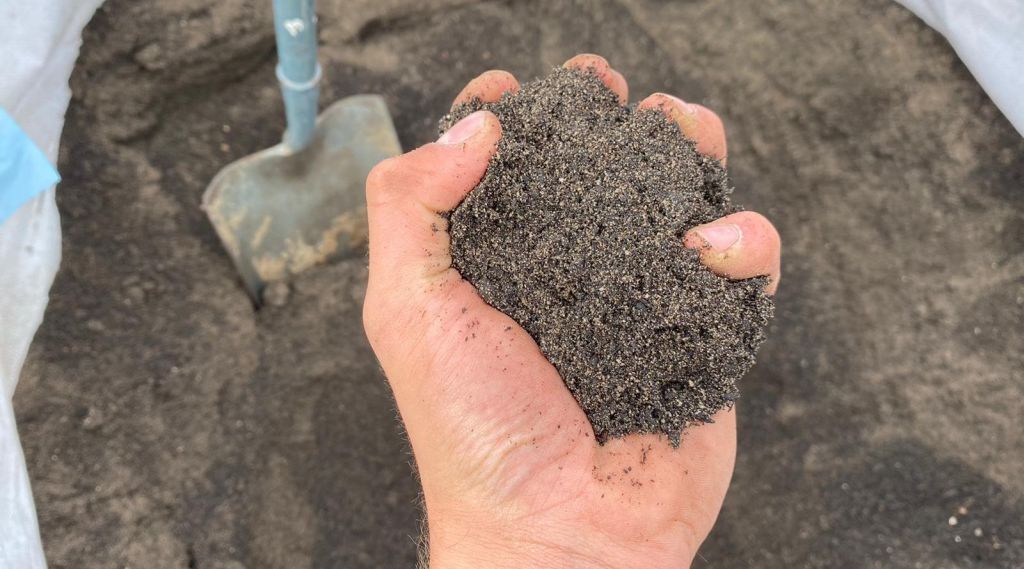
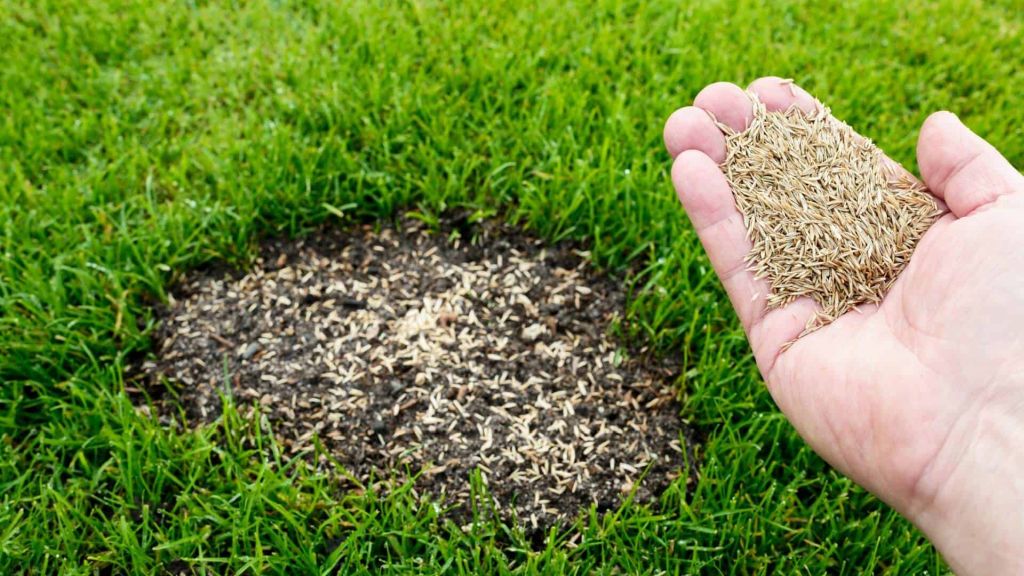
Today, low spots are removed by top dressing the lawn, which means adding topsoil to the low spots and bringing them up to the same level as the higher grade. Dumping small piles of soil across the yard and raking it out while leaving the grass in place accomplishes this.
Where the new soil depth is less in 1 to 1½ inches, the grass will probably grow back up through the filled area. I do not recommend placing more than three inches of soil on top of grass because it will smother the old and may cause it to decay that could create methane gas that can kill the new grass growing above it.0
Instead, in the deeper spots, I suggest splitting open the existing sod and filling in beneath it with soil, then relaying the sod. You could also top dress half the depth this year and the remainder the following year. You can also remove the old grass, add soil and reseed or resod areas or whole lawns.
To determine how much soil you will need, measure the length, width and average depth of the shallows or dips in question. A cubic yard of pulverized and blended topsoil, which is machine processed to clumps no larger that the size of the end of you finger, will cover a 648 square foot area to a depth of half an inch.
Now is the time to get the materials on hand as well as the mindset to begin top dressing the lawn. Functionally do the job between August 15th and September 10th. The days are getting shorter and the nights are getting cooler. These factors will keep the watering responsibilities more manageable and the weed seeds will be less likely to germinate in the Fall. This gives the lawn a better chance to grow back quickly and be mowed 4 or more times and be ready for winter.
Gardening
Fall is the Best Time To Plant Shade Trees
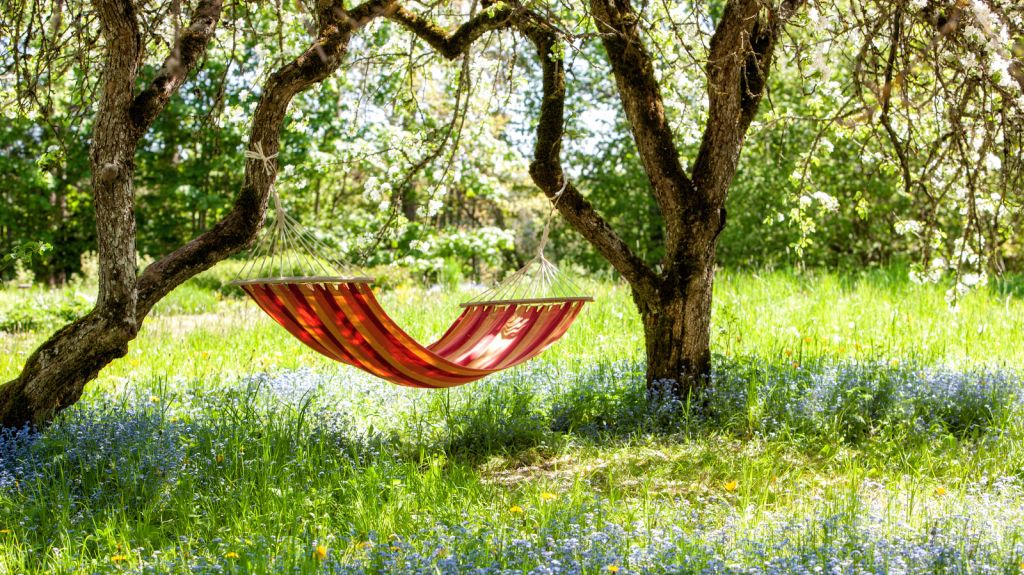
If suffering through another hot muggy summer seems unbearable, then plant shade trees this fall for cooling shade next year and years to come. Besides providing shade, trees produce oxygen, create sound and visual screens and add color and texture to the landscape.
It is best to plant trees now as they enter a stage of dormancy in the fall. Dormancy is somewhat similar to hibernation for animals. In the winter a hibernating animal’s respiration and heart beat slows. Trees also slow their growth functions in the fall and winter. This lasts until spring when the warm weather and warm soil trigger renewed growth.
During dormancy, no growth occurs in the upper branches and attention is given to growing a stronger root system. This stronger root system will better support foliage growth in the spring.
One of the more popular shade trees is the maple. Each variety of maple has its own distinguishing characteristics, but most are rrecognized by opposite paired leaves and winged seeds, which we called “helicopters” as children.
The Norway maple has a rounded overall shape with very dark green leaves and dense foliage. It grows to about 40 feet in height and width.
The Sugar maple produces the sap from which maple syrup is derived. It grows to a height of 60 plus feet and generally appears taller than broad. In the fall it has brilliant orange foliage.
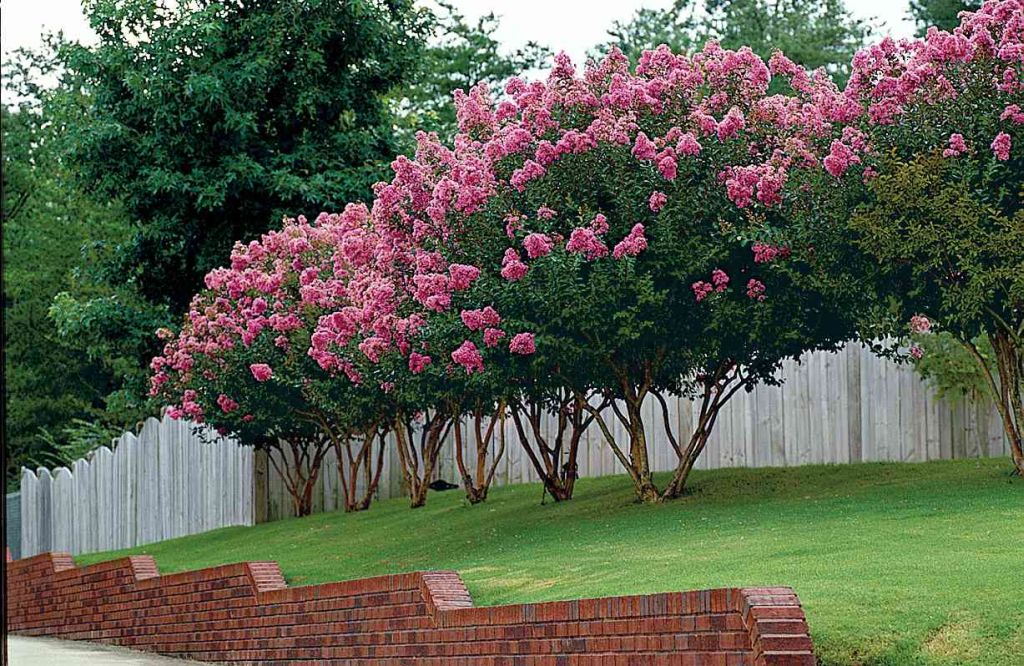
The Red maple’s leaves turn a bright red in he fall while the canopy may reach 45 to 60 feet high. It should not be confused with some of the Norway maple varieties which have wine colored leaves throughout the growing season. There are many exciting new varieties of this tree.
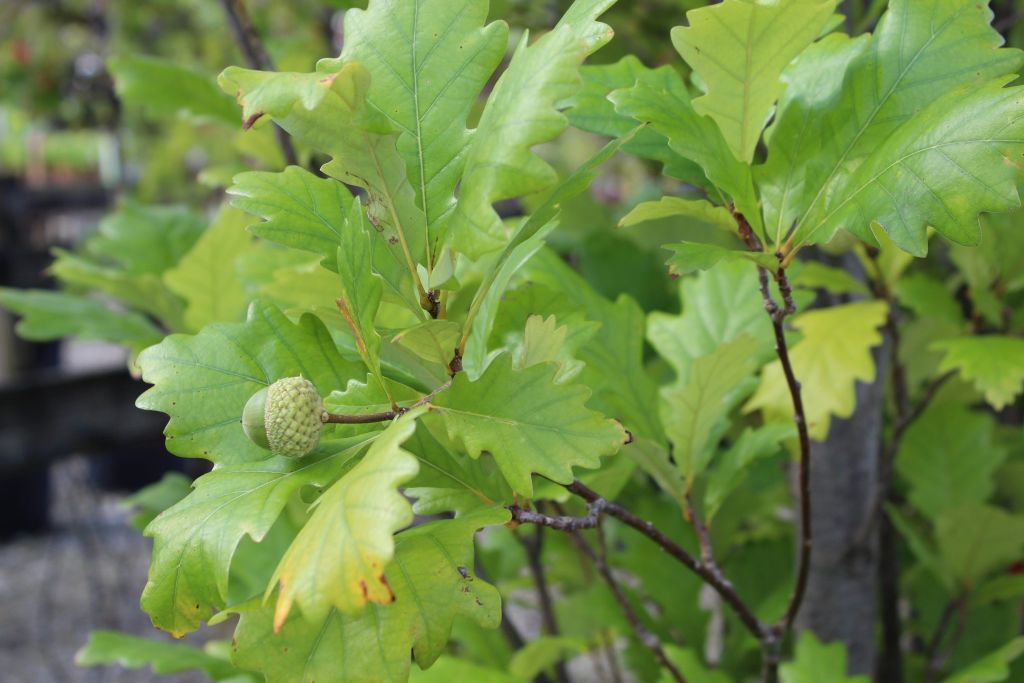
Oaks are known for their seed, the acorn. They have a stately shape, and some grow to almost 100 feet in height. The three most common varieties of oak are the Red oak, White oak and Pin oak.
Many oaks keep their leaves even through the winter. I know of one woman who planned her entire landscape around some beautiful Pin oaks. As a young girl, a Pin oak had grown outside her bedroom window. The sound of its leaves rustling in the winter reminded her of her childhood.
Another former landscape client of mine once told me she wanted a “happy” tree. I asked her what that was, and she said, “You know, the kind where the branches curve up like uplifted arms.” She was describing the ash with its characteristic upright branches.
The two most common kinds of ash in Ohio are the Green ash and the White ash. There are many other varieties. Some, like the Autumn Purple and Autumn Applause are known for their beautiful plum colored fall foliage.
Another popular shade tree is the Honey Locust which grows from 35 to 60 feet tall and has small leaflets, which give the entire tree a light, airy appearance. They are often planted in city locations because of their high tolerance to temperature extremes, crowding and pollution.
A shade tree which thrives in less congested city conditions is the linden, or bass wood, which has medium sized dark green leaves with a gray underside and dense foliage. Its branches appear dome-shaped.
Shade trees not only help beat the summer heat but add landscape pleasure year round. Plant trees now and on through the Holidays for next season’s enjoyment.

Exercise and Supplements for a Better Lifestyle

Seasonal Eating: What to Cook in Spring, Summer, Fall, and Winter

The Rise of Glamping: Luxury in the Wild

Fall is the Best Time To Plant Shade Trees

Cooking for Special Diets
The Regal Prince Oak: A Superior Columnar Choice
-
 Gardening2 years ago
Fall is the Best Time To Plant Shade Trees
-
 Food and Cooking2 years ago
Cooking for Special Diets
-
Gardening2 years ago
The Regal Prince Oak: A Superior Columnar Choice
-
 Food and Cooking2 years ago
The Allure of Korean Evodia: A Gardener’s Delight
-

 Food and Cooking2 years ago
Journey Through Global Flavors
-
 Gardening2 years ago
Top 4 Products For Your Home Garden
-
 Gardening2 years ago
Top Dressing Your Lawn: How to Level Uneven Terrain
-

 Gardening2 years ago
Prepare Your Lawn for Summer Heat